

The struggle for truth continues in 2026
Good riddance to 2025 where journalism and the truth itself has been under a relentless attack, and as we lean into the New Year we should remember the struggle for truth is the story of human history

At the bitter end of a difficult year, I feel more than ready to say goodbye to 2025 and eager to join those who are searching for hope that things will be better in the New Year ahead.
It’s not easy to find that hope as we lean into 2026. But we have to try and we have to do what we can to keep up our spirits in fighting the good fight on the side of truth. As we do so, I hope we might remember it is a struggle, not a war. And it is a struggle that has been around a very long time. Indeed, since the beginning of time.
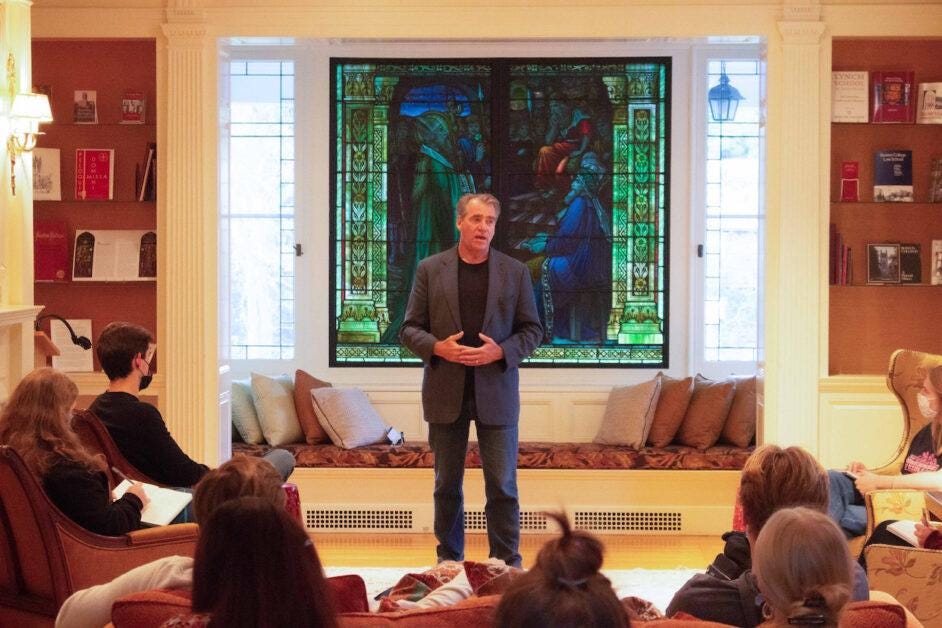
For three years I taught a course at Boston College titled “Truth: A Short History.” The course title was sort of a lame attempt at academic humor. The reality is, of course, that there is no concise history to the human struggle to search for truth. It is as primal as cave drawings that depicted some brave soul using a torch to figure out what beast was lurking in the darkness. It is as ancient as the figures in classic Greek tragedy who endlessly pondered the meaning of truth in texts like Plato’s “Allegory of the Cave,” which tells of prisoners chained in a cave who mistake shadows for reality. It is as profound as the books of the Hebrew Bible and as challenging as the parables of the New Testament. I begin the course with the story of Jesus being condemned to death by the Roman occupying force as he is brought before Pontius Pilate to be handed his fate. Pilate asks Jesus, who is bound and dressed in rags, if he is truly the “King of the Jews.” Jesus avoids an easy answer, replying instead, “I am the truth.” In a scene that is as cynical and harsh as any modern commentary on Fox News or MSNBC, Pilate responds with imperious contempt, “What is truth?!” I also explore how truth is one of the many words for God in the writings of the Quran.
And we looked at how truth became more grounded in systemic logic and science through the Enlightenment. The course looks at the history of legal evidence through the failures of logic that defined the 17th-century witch trials. And the politics of truth through the American Revolution of 1776 and the founding fathers’ belief in “these truths” that “we hold to be self evident.” I try to offer context to understand a time in America as dark as the one we are in now through the lessons to be learned about the vicious slander of the McCarthy era. I introduced students to the rise of the advertising age where corporate lies were peddled for profit as never before, and in many ways served to erode the whole foundation of modern truth. And in a more contemporary context, we looked at truth through the lens of the polarization that came with the digital age and that led us right up to today’s Trump America and what may be remembered as the “post truth era.” At the end of the class, I introduce the “Age of AI,” and why I hold out hope for artificial intelligence as a transformative moment in the human narrative for our eternal journey toward truth.
(Next week, I will write about the idea specifically as it applies to local news and why there is a reason to be hopeful in 2026 that the profound crisis in local news may find its solution through AI. Not by getting rid of reporters, but by showing the massively over funded AI platforms why they need to invest in local reporting and local truth now more than ever.)
My point in building out the syllabus for the class at Boston College was to find a way to share that history has always been told along a narrative line of human beings and their struggle to fight against falsehood and to pursue that which is discernibly true. The struggle continues as we head into a new year. In writing this post, I thought I’d look back at how I started this first full year on Substack for GroundTruth, and I thought I’d share that post as it holds one of the best and most informative quotes for journalists trying to fight the good fight these days. Here is what I wrote last year:

At GroundTruth, we won’t turn away from threats to a free press. But we see this potential assault differently, guided by former Washington Post editor Marty Baron’s memorable phrase in the first Trump administration when asked whether he felt the paper was at war with Trump.
“We’re not at war with the administration, we’re at work,” said Baron, who, before going to the Post, was my boss at the Boston Globe and one of the greatest editors of our time.
Doing the work, regardless of who is in power has been one of the guiding principles we instill in the reporters we support. So, in that spirit, we want to celebrate the work of GroundTruth in supporting our amazing Report for America and Report for the World corps members and their host newsrooms where they work every day to serve their communities.
So I hope this community of readers might remember those words I wrote last year and hold us to task: In the struggle for truth, we are “not at war, we are at work.” Now, those words from Marty Baron are truly words to live by.
Support GroundTruth on Substack in 2026
To sustain our independent community-based journalism, I’d like to invite you to consider becoming a member of GroundTruth on Substack. For just $5 a month—or $50 for the whole year—you can help us continue producing independent, community-based journalism. If you’re not able to contribute right now, that’s okay—our newsletter will remain free and without a paywall as we truly believe these times require all of us to do what we can to bridge the divides. If you’re already a paying member, thank you. Your support fuels GroundTruth’s mission to inspire civic dialogue through independent, community-driven journalism that is both global and local.
Thanks Charlie, 100% behind you in this effort to pursue the ever-illusive truth, perhaps the most fundamental underpinning for a successful democracy.