

The Presses Keep Rolling
The heyday of printing newspapers is in the past, but the print edition for many readers and lots of small community newspapers is not dead yet.

It was the last great newspaper war in America.
A fabled time in New York City in the 1980s and 1990s when four major daily newspapers were vying against each other every day for breaking news and fighting for circulation in the trenches of newsstands and kiosks that were on every corner. There was the “Gray Lady,” as The New York Times was known, the feisty, down-market New York Post, and Newsday’s New York edition which was snidely referred to as a “tabloid in a tutu.” And then there was the brawny tabloid Daily News, which had the largest daily print circulation in America at more than 1 million, and it was affectionately referred to as New York’s “Hometown Newspaper.”
I worked during that newspaper war as a street reporter, the equivalent to the infantry, and it was exciting to take the next hill, so to speak, and often disillusioning to see the damage that the battles left behind. But one thing is for sure, it was never boring. I also served briefly as a city editor for the New York Daily News and would occasionally go out to the printing plant in Prospect Heights, Brooklyn. In the fall of 1992, I remember going to check on a special section that I needed to review before the print run. It was late November and the presses were gearing up for a run for the Sunday after Thanksgiving which was always one of the fattest papers of the year stuffed with display advertising at the start of the Christmas shopping season.
That feeling of the rumbling of the Goss presses and the smell of the six-foot-high paper rolls and the floors sticky with ink is something I will never forget. This was the tail end of the golden age of print newspapers and back then the Daily News was still a commanding force in New York. I would move on from the Daily News to the Boston Globe in 1994 and there the presses rumbled right below the newsroom. On Thursdays, when the Sunday edition was in full production, you could feel huge paper rolls landing with a thud on the concrete loading docks on Morrissey Boulevard in Dorchester. The sound was the perfect metaphor for the impact the paper had when it landed every morning.
I feel lucky to have worked in newspapers in this heyday. Those of you who read this newsletter, know that we have been chronicling the shift away from print newspapers and into digital media and the demise of print newspapers which are shutting down at an alarming rate. But we have perhaps not focused on enough is the parallel downward trend for printing presses which seems at a glance to be going the way of steam locomotives. There is no question that the number of printing presses at newspapers is dropping, but there are also some interesting and perhaps surprising signs of life for printing presses and journalism with printed editions of magazines and newspapers, particularly for small local weekly newspapers like the one where I serve as publisher.
At a recent seminar sponsored by the trade magazine Editor & Publisher, industry experts did not sugarcoat the bad news, particularly the unpredictability and volatility that comes with printing in the digital age. The price of newsprint has doubled over the last five years due to pandemic-related supply chain disruptions, mill closures, and high energy costs, with costs ranging from approximately $580 to $670 per metric ton in 2025.
Nearly 100 percent of the newsprint in North America is produced in Canada, but newsprint has been exempted from tariffs of up to 35 percent imposed on Canada by the Trump administration. This has offered some short-term relief to the publishing industry, but it has exacerbated the long-term anxiety over the viability of shipping newsprint. The volatility of the print business and the inevitable momentum toward digital first news has caused several major daily news organizations to cease print publication. Two notable examples are the Minneapolis Star Tribune and the Atlanta Journal Constitution.
The closures and consolidations are playing out across the country right now and this has ignited a scramble for community newspapers to find a printing press that will serve their needs. Many local newspapers are having to travel long distances to get the paper printed adding to further costs to produce the print edition. The last printing press in Maine closed down in April last year, leaving the state without a place for a local newspaper to print. Most of Maine’s community newspapers now drive to New Hampshire or even further to get their paper printed.
But not everything is bad news in the printing world. Angie Stroud, market intelligence manager at Billerud, a major international company producing and marketing high-quality paper and packaging, cited research showing that consumers continue to engage with the printed word and that they see signs that consumers are expressing a desire for the tactile experience of print over digital. Billerud does not produce newsprint and was not trying to sell to newspapers at this event.
Stroud highlighted a data point that warms the heart of a print news publisher: A single print magazine is read, on average, by more than seven people. She added that there is a way for print and digital to work together and that each has unique strengths. As Stroud pointed out in the recent issue of Editor&Publisher, digital channels are more designed for speed and frequency, whereas print on paper is better suited for attention and memorability. Stroud pointed to neuroscientific research, including studies from Temple University, saying, “Print consistently outperforms digital in recall, trust and response rates.”
I think about this issue nearly every day in our small newsroom at The Martha’s Vineyard Times. We, like more and more newspapers, have to travel quite a distance to get our paper printed. For us it is made a bit more complicated by the fact that we are on an Island.
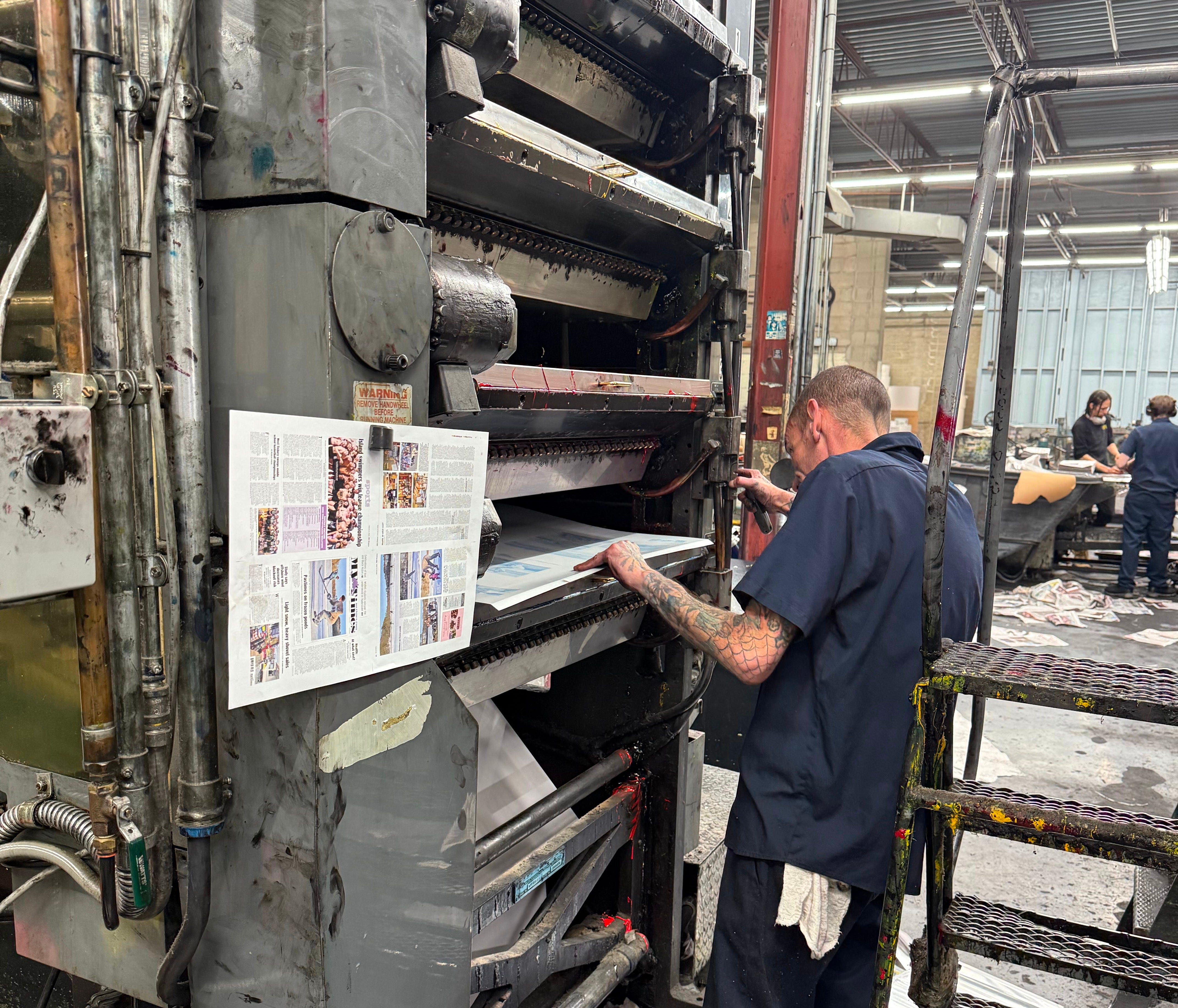
Each week, we work with TCI Press out of Seekonk, MA. Every Wednesday at 3:00 p.m. we ship the PDF files of the 32-page paper we produce for the 3,500 print subscribers, or “members” in our community. Inside the Seekonk printing plant, our PDF files are scanned onto plates, and then an experienced printing team runs the plates through the web of a four-color Rockwell printer.
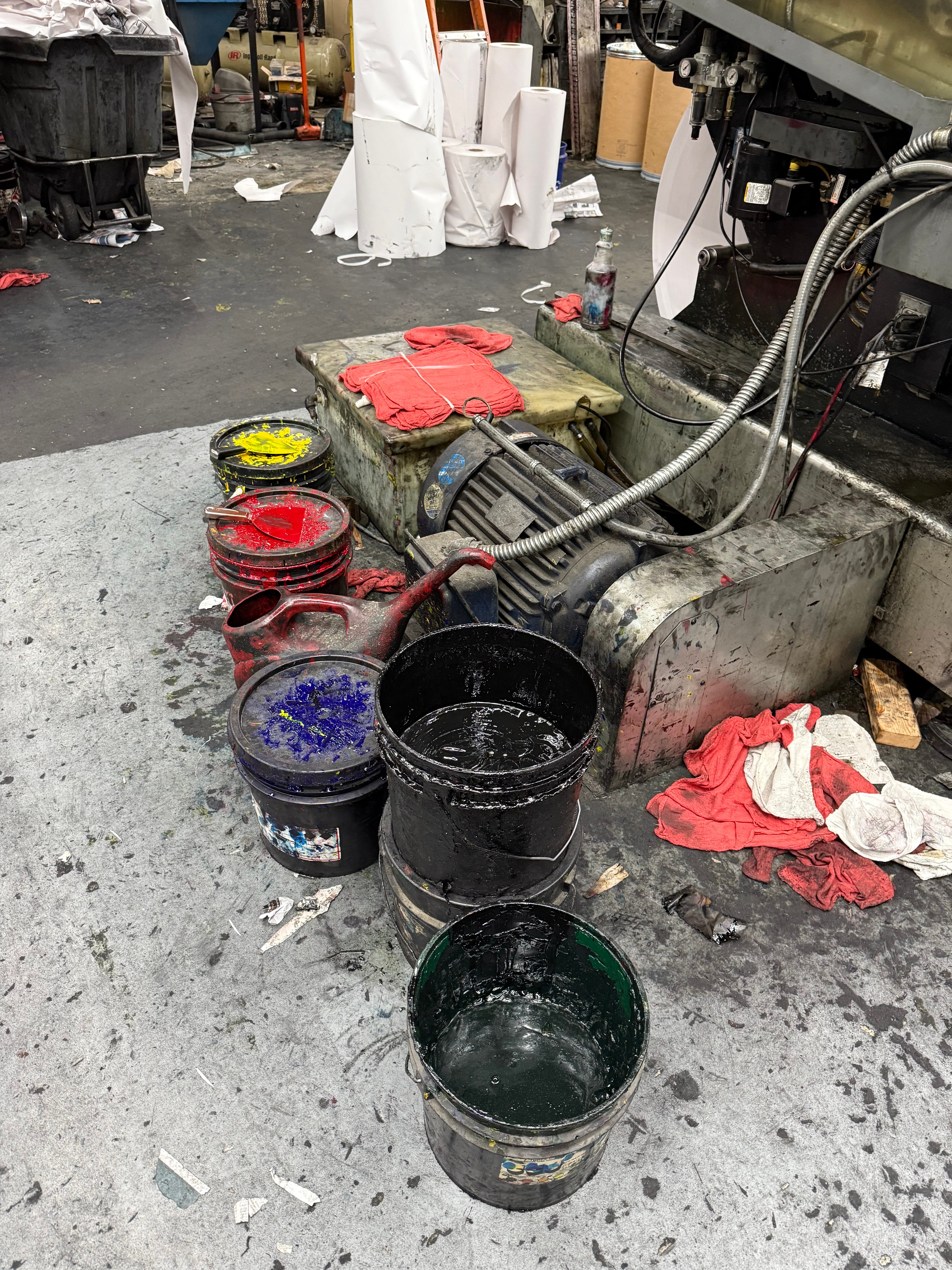
The pressroom is not quite as loud as the Daily News or the Boston Globe nor does it have the heft of impact, but it has a heartbeat to it that I love. Big rolls of newsprint are moved around with forklifts to be fed into the rumbling weave of the printer. And when it gets humming, it sounds like a freight train. The floors are as sticky with ink as they were at the Daily News plant in Brooklyn. It is all straight out of another century, and, maybe because I have loved working in print newspapers for most of the past 40 years, I am fond of all that noise and the ink-stained floors and smell of those rolls of paper. It smells like, well, news.
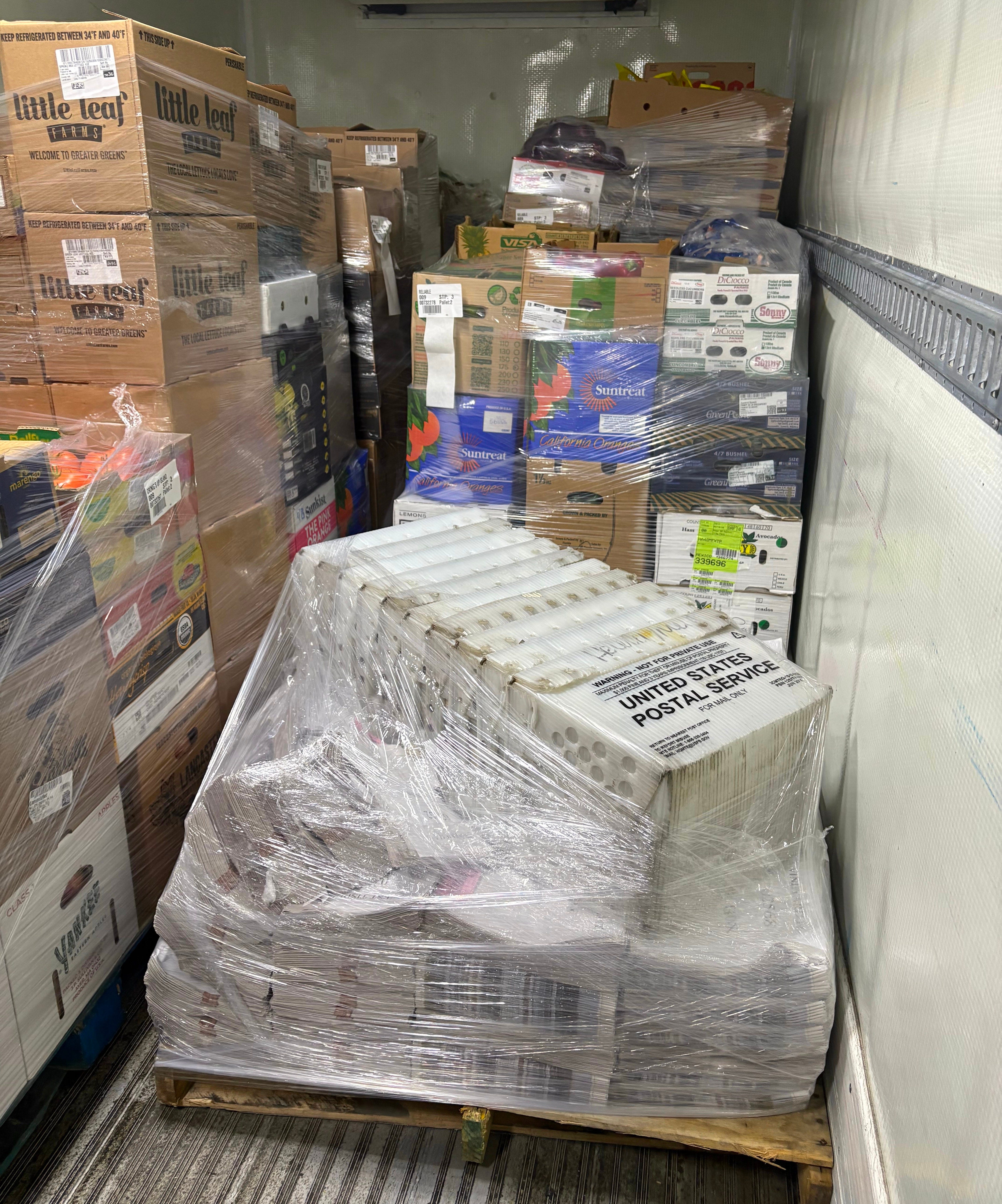
When our paper is printed and the copies are bundled together with twine, they are loaded into the back of a produce truck provided by the owner of The Martha’s Vineyard Times who happens to also be the long-time proprietor of Cronig’s Markets which keep the Island supplied with fresh produce in addition to everything else we need. It warms my heart to see the newspapers when they arrive to the loading docks at the back of the grocery store in the produce truck with loose heads of cabbage and broccoli rolling around the top of the shrink-wrapped pallets filled with our newspapers ready for delivery. We like to think the community service of journalism we provide is as much a part of the health of our community as the fresh vegetables with which the print edition arrives.
For publishers like myself that are tempted to walk away from the expense of producing the print product, it is a very important insight. Digital news gathering has far better metrics to assess audience engagement, but print has an intuitive feel that readers want and she warns this emotional reality should not be overlooked. For those considering dropping their print edition, Stroud had this to say: “Based on all the research that I’ve done and the impact that print has on people’s attention … to me, it’s a huge mistake.”
What we’re reading this week
When the killing of journalists disrupts nothing: a conversation with safety expert Elena Cosentino | Maurice Oniang’o, Reuters Institute for the Study of Journalism
The Centre Daily Times unionizes after backlash to McClatchy’s AI tool | Andrew Deck, Nieman Journalism Lab
War in Ukraine: How RSF continues to help journalists working under Russian fire | Reporters Without Borders
The 60 Minutes Crisis Reveals the 3 Questions Every Leader Should Be Asking Right Now | Soren Kaplan, Inc.
This CEO keeps going viral for thirst-trapping journalists with $200k jobs to be head of content. Yes, he’s trying to prove a point | Nick Lichtenberg, Fortune
Allow me to direct you to a book written and edited by Steve Broening and Fred Hill: “The Life of Kings: The Baltimore Sun and the Golden Age of the American Newspaper.” Broening is a former AP foreign correspondent, the the first op/ed editor and later diplomatic correspondent for the Sun. Hill was the bureau chief in London and Paris for the Sun when it had some dozen foreign bureaus.
The title of the book takes its name from a remark made by H. L. Mencken (“the sage of Baltimore “) who worked for the Sun for many years. The book is a collection of essays by many former Sun reporters at a time when newspapers were so deeply important in American society and culture.
Great writing Charlie, brings the old newsrooms and printing presses right back into focus so effectively in a lovely sensory way.
This makes so much sense '...digital channels are more designed for speed and frequency, whereas print on paper is better suited for attention and memorability. Stroud pointed to neuroscientific research, including studies from Temple University, saying, “Print consistently outperforms digital in recall, trust and response rates.”'
Good to know that papers like MVT are still at it despite the challenges.
And nice to see my former student, award-winning journalist Andrew Deck featured in your lineup of reads this week :)