

Local Reflections on World Press Freedom Day
The struggle against a global assault on journalism is being fought on a daily basis in the trenches of local news

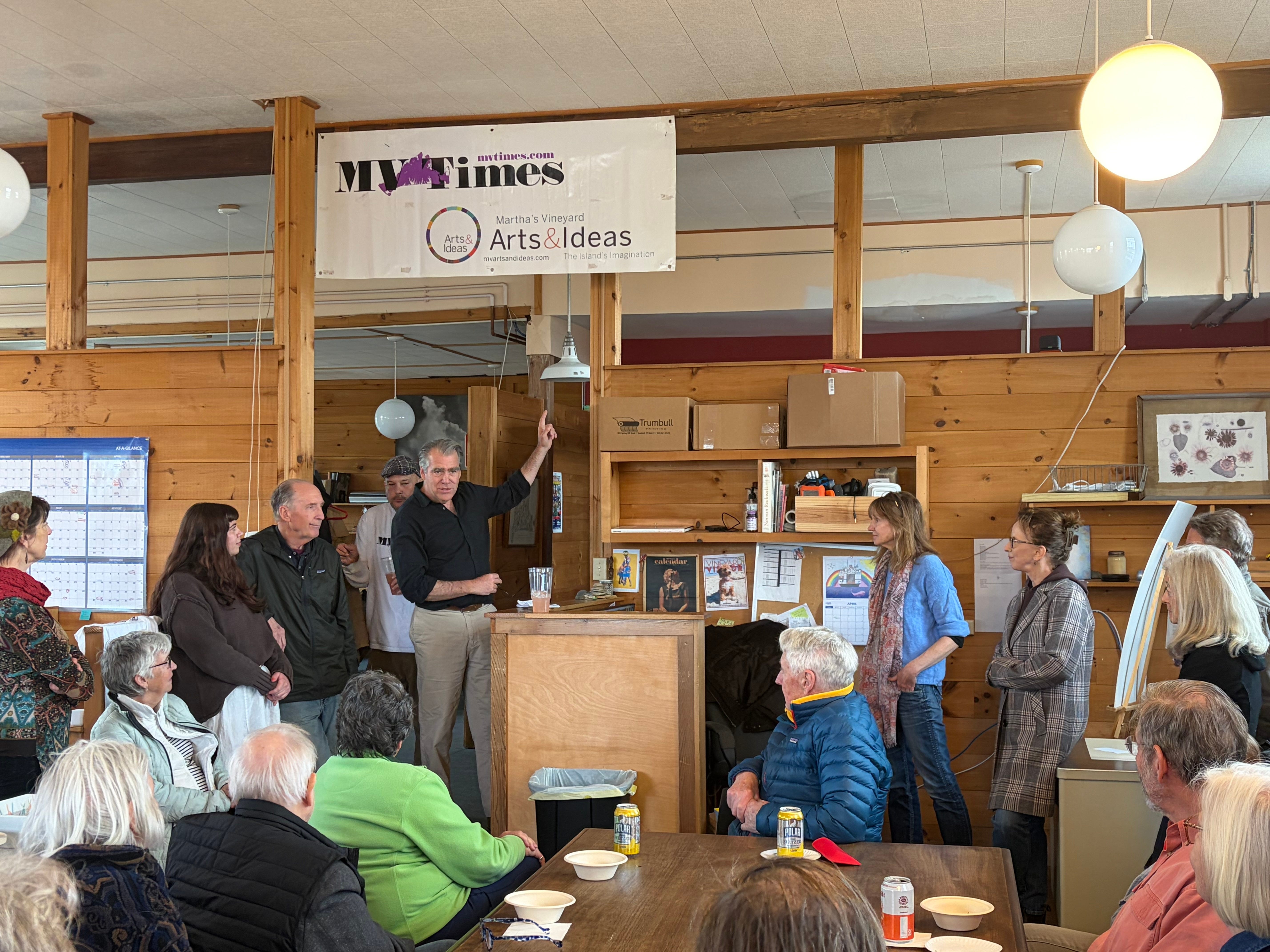
About 35 Islanders crowded into the modest and cluttered newsroom of the Martha’s Vineyard Times on the edge of the harbor amid boats undergoing repairs and restoration, a rite of Spring on any island. It was late in the afternoon on May 3, which marked World Press Freedom Day, and you could feel a cold, damp breeze blowing in through rattling window frames.
This quarterly gathering, which we call a “Publisher’s Forum,” grows out of a promise we made to the community when I became publisher just over two years ago, to host outreach and information sessions about what we are working on and what our readers would like to see us working on. They offer essential insights into the community we serve and are important for all of us trying to keep local journalism alive in our respective towns and cities. We often hear about the big themes our audience cares about: the environment, education, housing, immigration and the economic inequity that challenges the island. This time, all those same issues came up. But what made it feel different is that the gathering landed on this date honoring press freedom, and that brought to the forefront some of the global challenges of journalism, and how those challenges play out locally.
At this forum, we chose to look out beyond the harbor at the world to better understand our own community. And I shared an analysis that has shaped much of my work as a local and national reporter and as a foreign correspondent in the Middle East and beyond. My take on this distressing moment we live in is that the crisis in local news has everything to do with the crisis in global democracy. As I have written before, local news is a binding agent that, when done right, can pull communities together around a shared set of facts, around solutions to challenges we face, and around the stories of those who need to be held accountable and those we need to celebrate.
When a community loses its local news source, forming a barren media landscape known as a “news desert,” we know three things happen: voter participation declines, polarization rises, and bond ratings are weakened. The impact on bond ratings, in simple terms, indicates that banks and other institutions of lending do not want to invest in communities where no one is watching the store. So that is why I say the crisis in local news has everything to do with the crisis in our democracy. We are coming undone and pulling apart in no small measure because we are losing the glue that holds us together: trusted, local news.
You’ve probably heard this crisis explained before if you have read my essays in this space, but it is sadly becoming more and more true every day, not only in the United States but also in Ukraine and across Europe, in the Middle East, Africa, Asia, Latin America and so many places where conflict is brewing. So, we thought World Press Freedom Day felt like the right day to make the connection to what this day means for the year-round community of about 20,000 people who live on our island. The population surges in the summer to 100,000, which creates stresses and strains and economic disparities on our island as it does in so many seasonal communities.
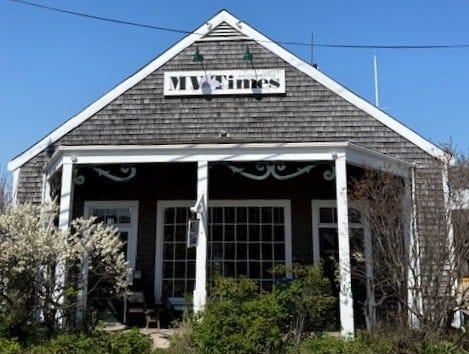
With refreshments donated from a diner across the street, I shared our efforts to become “digital first” in our editorial mission at the Times, which has a weekly print edition with 3,500 readers, or “members,” as we call them, as well as daily online coverage that serves about 20,000 subscribers. We are increasing the commitment to digital content, I explained, with a much-needed investment in and redesign of our website, which has been desperately in need of an overhaul in recent years. I used the phrase “deferred maintenance,” which evoked some nods of the head on an Island where the brutal New England weather keeps every homeowner on their toes providing maintenance to houses battered by the salt air and strong wind.
One persistent issue that readers wanted to address is the moderation of the comment section on our website. It is a common criticism of publications – local and national – that comments can quickly descend into polarized and divisive dialogues. We do our best to moderate the comments for our members even as many newspapers have grown so frustrated with the lack of civility that they have just dropped them altogether. We learn by listening to our audience how we can make the dialogue productive, and we are going to keep working on it.
We are definitely not done with this process of reviving our website, and we shared with our readers that we still have quite a way to go to get it right. We also made several important announcements at our forum in the newsroom, including the fact that we are hiring a new director of marketing and digital strategy, a position that we hope will help us to better serve our community and grow our audience.
As publisher of our local newspaper along with the owner, Steve Bernier, we are committed to keeping the business plan within the model of a “for-profit.” I add the quotes because it is “for profit” only in name, not in reality. Our local news organization, like so many others across the country, continues to suffer losses. We have tried to offset those losses by serving our community through a non-profit arm which we call Islanders Write. The name comes from an event that brings Island journalists and authors to talk about their craft, which we have offered free every summer for the last 14 years. The initiative allows us to blend traditional advertising revenue with non-profit fundraising that is mission driven. It is a “hybrid” model which I have been working on for almost two decades now, and which I have written about as an emerging model in struggling local news organizations across the country.
This “hybrid” approach has also allowed us to support a full-time reporter, or “Island Writer,” as we have named them, since last year. She is Sarah Shaw Dawson, who was born and raised on Martha’s Vineyard and focuses on housing issues on an island where the lack of affordable housing is a crisis for our year-round residents who are being priced out by expensive summer homes. It is a problem exacerbated by a short-term rental market that is pushing up the price on year-round rentals and leaving many hardworking people on the Island living in overcrowded conditions all summer, or in many cases just leaving the island to live elsewhere.
We see that exodus of locals as a threat to the character of our community, and that is what motivated us to start this non-profit initiative so we can offer year-round jobs in journalism and hopefully retain local voices to tell the story of their island. We will be adding two more of these reporters in the year ahead thanks to some generous donations.
We also announced an internship in the name of the late Tony Horwitz, a Pulitzer Prize-winning journalist and writer and year-round resident who loved every inch of the Island. The new intern we have named hails from the Brazilian community that is vital and thriving on our island despite the climate of fear created by the aggressive federal immigration policies. We are thrilled to have a young intern who can be part of our effort to serve the Brazilian community and the whole Island by offering a translation service for all of our articles into Brazilian Portuguese. There is a chance here for us to all learn much more about the community, and for the community to learn more about our Brazilian neighbors.
So why am I sharing these very small town updates on the business model of my local newspaper here in a newsletter that tries to serve a community that is national and global? It is because this kind of local innovation and reinvention and outreach is happening in small newsrooms across America, and around the world. For sure, we are fortunate on Martha’s Vineyard to have resources that can help us get the job done, but we believe every community out there has its own landscape of opportunity and terrain of adversity that needs to be explored, and we applaud all of you out there who are navigating it every day.
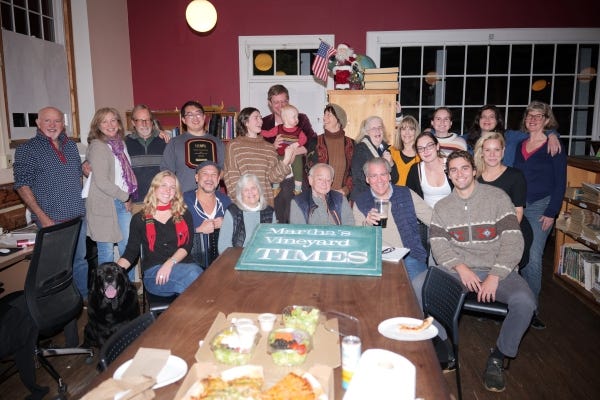
I am often writing about the crisis in local news and the news deserts and hopefully you have been following our journey to different newsrooms across America and around the world and it can feel like it is all bad news out there. But as I took on the humbling task of trying to figure out how to keep our small paper up and running in my local community, I realized I am part of a family of local publishers who are all working overtime to serve our communities through trusted, local news. And I applaud all of the efforts to keep the lights on. To those publishers and leaders in media out there and all the reporters working with them: Keep the faith. What you are doing is part of a fight for press freedom in America and around the world. It is a global battle fought on local frontlines, and a struggle for truth that is worth fighting for.
What We’re Reading this week
Trolling, memes and deepfakes: How AI is thickening the fog of war | Gretel Kahn, Reuters Institute for the Study of Journalism
With Malice | Jem Bartholomew, Columbia Journalism Review
Newsletters, live coverage, a one-time magazine: The World Cup is becoming a testbed for journalism experiments Neel Dhanesha, Nieman Journalism Lab
In this Duke journalism class, failure was part of the assignment. It led to real AI tools for local news | Bill Adair and Tyler Dukes, Poynter
The Intercept didn’t just publish a story about ICE — it drove it around JFK | Hanaa’ Tameez, Nieman Journalism Lab
A great gathering on an especially important day.
Thanks Jack, and thank you for being part of the day as the MVTimes' resident constitutional scholar, and defender of the 1st Amendment!