

Defining solidarity with Ukraine on the war’s fourth anniversary
The war against Russian aggression marks a grim milestone amid concerns that U.S. and European allies are wavering

CAMBRIDGE - An arctic chill cut its way down Massachusetts Avenue here in Harvard Square where I came for an academic conference titled “Solidarity Within and Beyond Ukraine.”
It was the morning of January 30th, and I was cursing the frigid cold and the poorly plowed roads while climbing a snow bank to feed a parking meter, a feat which required better boots than the ones I was wearing. It was so damn cold I could not think straight and was fumbling with my credit card when I looked up in despair at the Cambridge Savings Bank to see the digital clock blinking at 9 degrees in the late morning sun. With the windchill factored in, the temperature was dipping well below zero. That’s when it hit me that the cold and the discomfort we’ve felt here in New England in this bleak midwinter of 2026 has produced an unconscionable chorus of whining, and I was part of it.
How could I possibly complain about the frigid temperatures when I would be heading into a conference to hear Ukrainian dissidents and soldiers and a former prisoner of war telling their stories of grit and survival. It was a profane moment that came with a flush of shame.
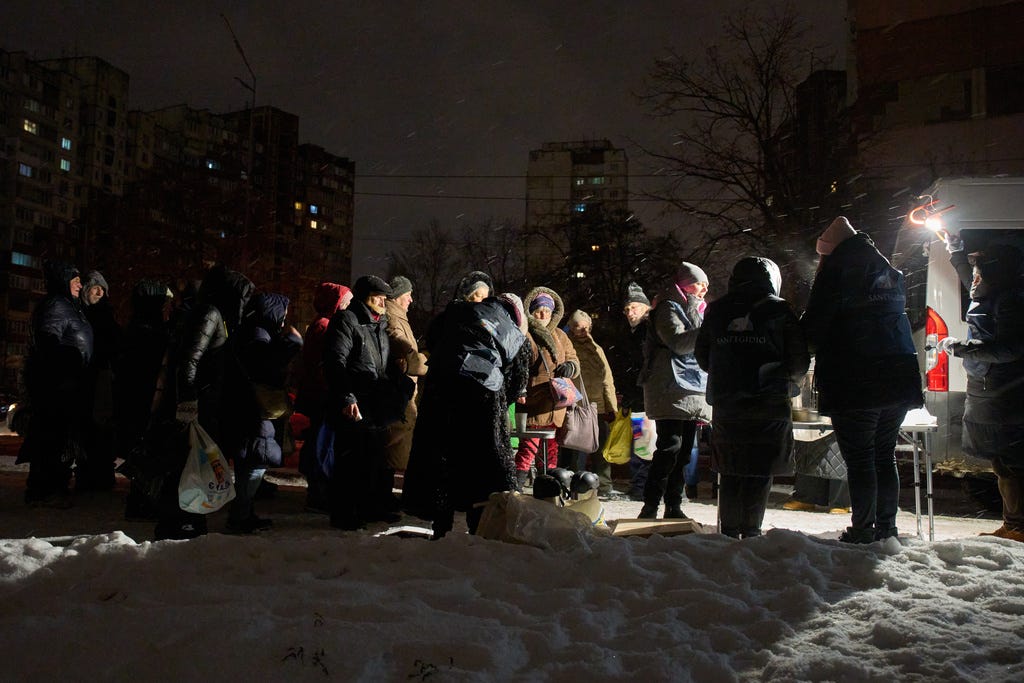
All I could think of now were the Ukrainian colleagues gathered for this conference who were shouldering a burden of guilt about brothers in arms on the frontlines of the war in Kharkiv and the Donbass or loved ones – children, wives, grandparents – in Kyiv amid the coldest January in 16 years. As Vladimir Putin’s military dispatches wave after wave of Russian drones aimed at destroying Ukraine’s energy grid, some apartment blocks in major Ukrainian cities like Kyiv are recording temperatures consistently below freezing on the inside of the building.
There is a tyranny to sub-zero temperatures. Like a brutal occupier, the cold descends on your brain and your body and you are quite literally frozen into a kind of submission that makes it impossible to think rationally or to ponder really anything outside of the idea of finding a place to get warm. It is animalistic. Putin knows this. It is also a war crime.
If there is anything we can take from this winter of 2026, it is to breathe in the frigid air as a bond of solidarity with those suffering in Ukraine. But on the exhale take time to ponder what is solidarity, and what does it mean for Americans to be in solidarity with Ukraine? This was the purpose of the conference at Harvard’s Ukrainian Research Institute (HURI.)
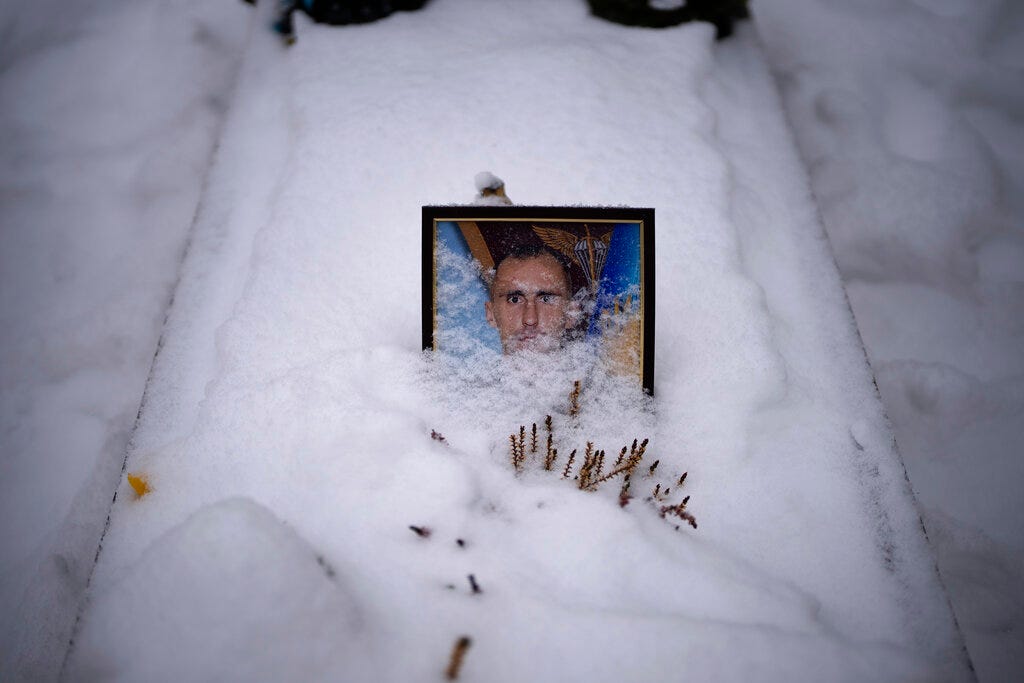
This month, on February 24, the world will mark the 4th anniversary of the war in Ukraine, making it the longest and largest land war in Europe since World War II. Consequently, the death toll is mounting every day. The number of Russian and Ukrainian troops killed, wounded or gone missing in nearly four years of war could reach 2 million by this spring, according to a report by the Washington-based Center for Strategic and International Studies (CSIS.) The report estimates Russia has had about 1.2 million casualties, including as many as 325,000 deaths, while close to 600,000 Ukrainian troops have been killed, wounded or gone missing.
And while Ukrainians shiver and fear for their lives and for the fate of their country, the president of the United States was just returning from Davos at the World Economic Forum, where he and his administration worked overtime to undercut the international world order that once provided the only framework that could force Putin to stop Russian aggression against Ukraine.
The next stage of this diplomatic battle will take place today at The Munich Security Conference, the biggest gathering on international security policy in the world, which will bring Trump’s Secretary of State Marco Rubio face to face with Ukrainian president Volodymyr Zelenskyy. But there is very little hope that the gathering will yield any diplomatic breakthroughs. The European Union has committed to $100 billion more in military support for Ukraine this year. But the U.S. has made clear to Ukraine that it will not finalize a deal on security guarantees to protect Ukraine from future Russian aggression until Kyiv and Moscow reach an overall agreement to end the war, according to two of the European officials and a senior U.S. official. And with Russia holding firm on demands for territory that Ukraine won’t budge on, the peace process is jammed.
Emily Channel-Justice, director of HURI’s Temerty Contemporary Ukraine Program and the organizer of the conference, said, “There is not just one solidarity, there are many kinds. Even when we get frustrated with the U.S. for doing such a terrible job with being in solidarity, there are important ways to think about the word and what it means.”
Channel-Justice defined three broad ways of showing solidarity on a personal level: speaking, acting and knowing.
Acting on solidarity for friends and colleagues who are freezing in apartments can feel futile in a war with such a devastating toll, but she said even the smallest efforts, like donating a $15 blanket, can be a meaningful form of solidarity.
Speaking out against the war and making your voice heard even on a local level also matters, she said, such as encouraging your congressman to take action or asking your community to support Ukraine and organizing efforts through faith communities and local chapters of human rights organizations.
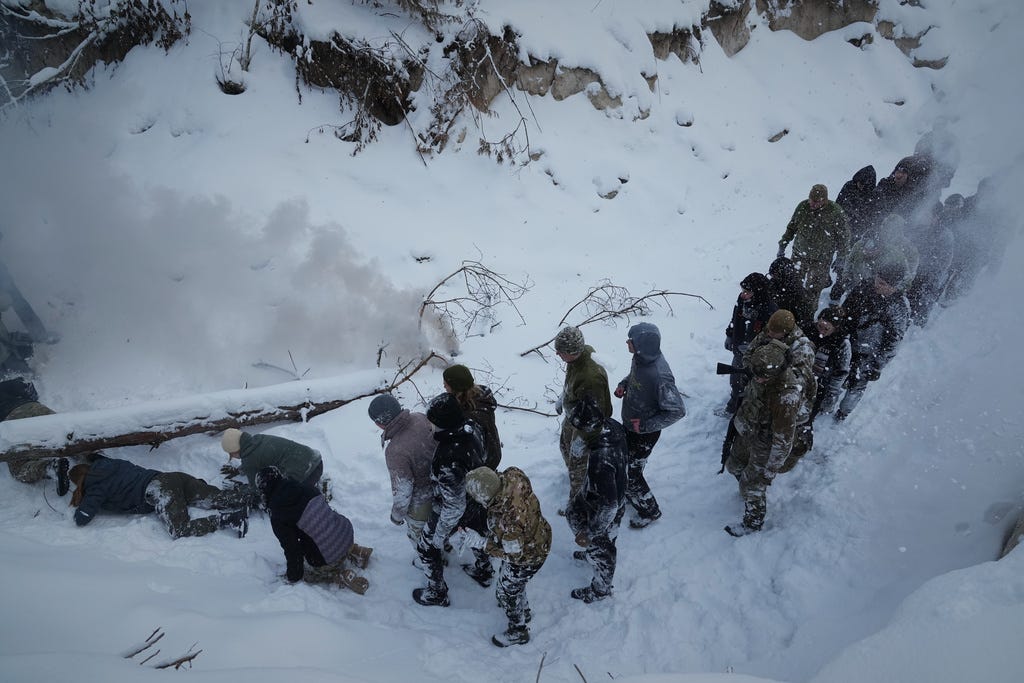
Knowing is perhaps the most important basis for action, she said, adding, “This is what felt like a very interesting idea for me, having a deeper understanding of the country, recognizing that the future is not certain and there is no easy resolution. That idea of knowing is what will stay with me the most.
“You can’t be in solidarity with people you don’t know,” she added.
“This anniversary is difficult. It feels less hopeful particularly with the rising death toll and the lack of success in talks to end the conflict,” she added.
“It is difficult to watch a U.S. president negotiating with a leader whose country is over and over again committing war crimes and treating civilians as if it is nothing.
“Solidarity with Ukraine means solidarity with the world order that we all agree on in the aftermath of World War II. We have to understand that or it will mean we are potentially really in for a wake up call,” Channel-Justice said.
Yevhen Hlibovytsky, a former Ukrainian journalist and public intellectual who serves as an advisor to the Frontier Institute, a pro-democracy center that helps Ukraine focus on its strategic vision, said it is important to ponder the meaning of solidarity within Ukraine when considering the global context of the war.
“Solidarity is a dirty word in my book, and for many who came of age in the former Soviet Union. The word represented something meaningful in Poland, but for us [in Ukraine] it only carries the meaning of solidarity in a Marxist sense which rings hollow.”
What is most important to understand is Ukraine’s internal solidarity which he said has gone “un-interpreted in the US.”
“You have to see the solidarity of those who were at each other’s necks in the past, different religions, ethnic origins … Some have Russian last names and Crimean or Tatar language … So no easy answers here. But the solidarity is for all of these different perspectives coming together to sustain through this war, and to understand how high the stakes are.”
“We are finding something that we have never had before, and that is internal strength,” he said.
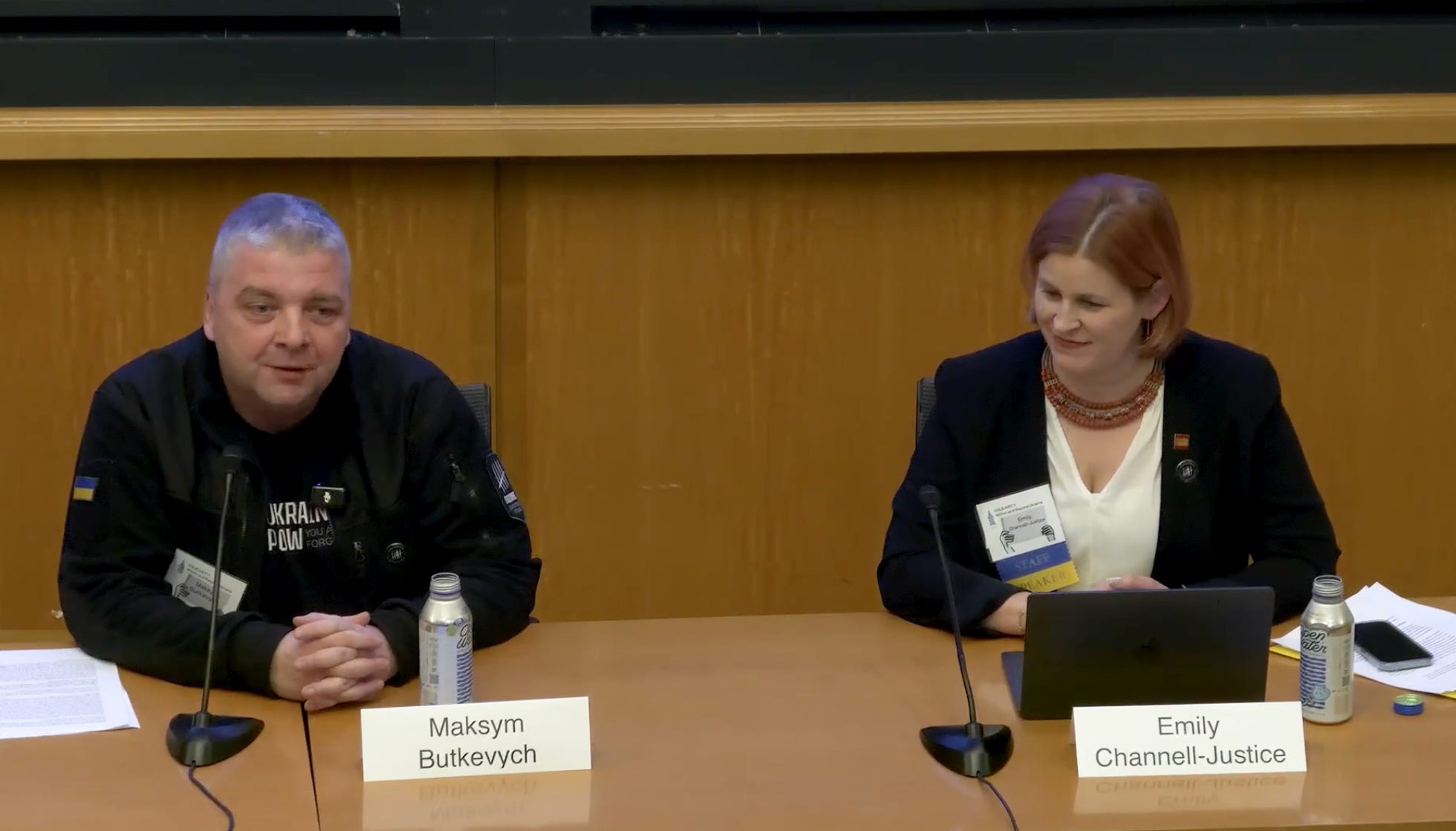
A resonant voice at this conference emerged from the keynote speaker, Maksym Butkevych, a human rights activist, journalist, former military serviceman and former prisoner of war. From the first days of Russia’s full-scale invasion, he joined the Armed Forces of Ukraine and was taken prisoner in June of 2022 in occupied Luhansk. After more than two years in captivity, he was released in a prisoner exchange in the fall of 2024. Last year he was awarded the prestigious Václav Havel Human Rights Prize.
Wearing a black sweatshirt that read “Ukrainian POW: You are not forgotten,” Butkevych shared how he was considered a pacifist before the Russian full-scale invasion. But he said that there was no question he had to take up arms to resist the tyranny of their full-scale invasion. He described the Kafkaesque legal proceedings that led to his conviction in the court of the Russian Federation and the sentence of 13 years. He learned of the acquiescence of Russians who participate in the tyranny of the system, but he also saw Russians who stood up and supported his cause on a very human level. At the end of the day, he said Ukraine’s defense against Russia’s aggression is a battle on behalf of not just Ukraine, but the whole free world.
“Ukraine is defending not only its territorial integrity or independence. As a country, Ukraine is defending fundamental values which are shared by many peoples around the globe, all those who want to live free in mutual respect, respect for human dignity and without fear,” Butkevych said in his address to the conference.
“We believe that we defend something very fundamental against imperialistic power which wages open war not against just certain independent entities, but against that worldview which has values of human dignity, human rights and human freedom at its very core…. This is why we treat this as our common story with so many people, and this is why solidarity with Ukraine to us is the solidarity of all people who want to base their lives on respect for human freedom and dignity,” he added.
Butkevych’s speech came at the end of the day. When he finished, he received a resounding applause and then the attendees, buttoned up their winter costs, put on hats and gloves and wrapped themselves in scrves as they pushed out into the still-frigid temperatures in the long shadows of the late afternoon on Harvard Square, reflecting on his words and Channel-Justice’s reminder that there are many ways to show solidarity, we just need to act on it.
What we’re reading this week
The battle for Ukraine isn’t just over territory | Deb Amos, The World
Maria Ressa on Trump’s 2nd Term: “Narrative Warfare & the Breakdown of Reality” | Amanpour and Company
When local news disappears, people turn to social media feeds, influencers and gossip | Michael Lev and Eric Rynston-Lobel, Poynter
What the Post Cuts Will Do | Siddhartha Mahanta, Columbia Journalism Review
The scramble to save D.C. sports journalism | Cuneyt Dil, Axios
As someone who protested vehemently against the Vietnam War in the 60s and 70s, I find I am appalled at myself for thinking that the only way to end this war in Ukraine is to hit Russia harder and harder. But the Ukrainians lack the military wherewithal to do so. Am I misguided?