

An always unpredictable Middle East is now more unpredictable than ever
American Muslim scholar Shadi Hamid offers a startlingly bold case for American power and assesses the meaning of Zohran Mamdani’s election as the first ever Muslim to serve as mayor of New York.

The only thing certain in the Middle East is uncertainty.
I learned this truism in the more than three decades I’ve covered the region. Those who confidently forecast where it is headed either don’t really know the land and its peoples, or don’t mind being proven wrong time and again. Or both.
These days the level of uncertainty in the Middle East is running unusually high amid shifting power balances, the aftermath of the war in Gaza, and the stepping back of U.S. influence in the region. One of the scholars I have gotten to know in my travels who unflinchingly understands the unpredictable nature of the region is Shadi Hamid, the Egyptian-American scholar and Washington Post columnist. I recently sat down with Shadi for a live interview on GroundTruth on Substack to discuss his new book, “The Case for American Power,” and to hear his views on the current state of the Middle East, which include a surprising but brilliant assessment that seems to defy many of his earlier pronouncements on the mistakes of U.S. foreign policy.
We also discussed the rise of Zohran Mamdani, who was elected New York City’s mayor this week in a historic election that Shadi believes reveals something important about America’s relationship with the Muslim world.
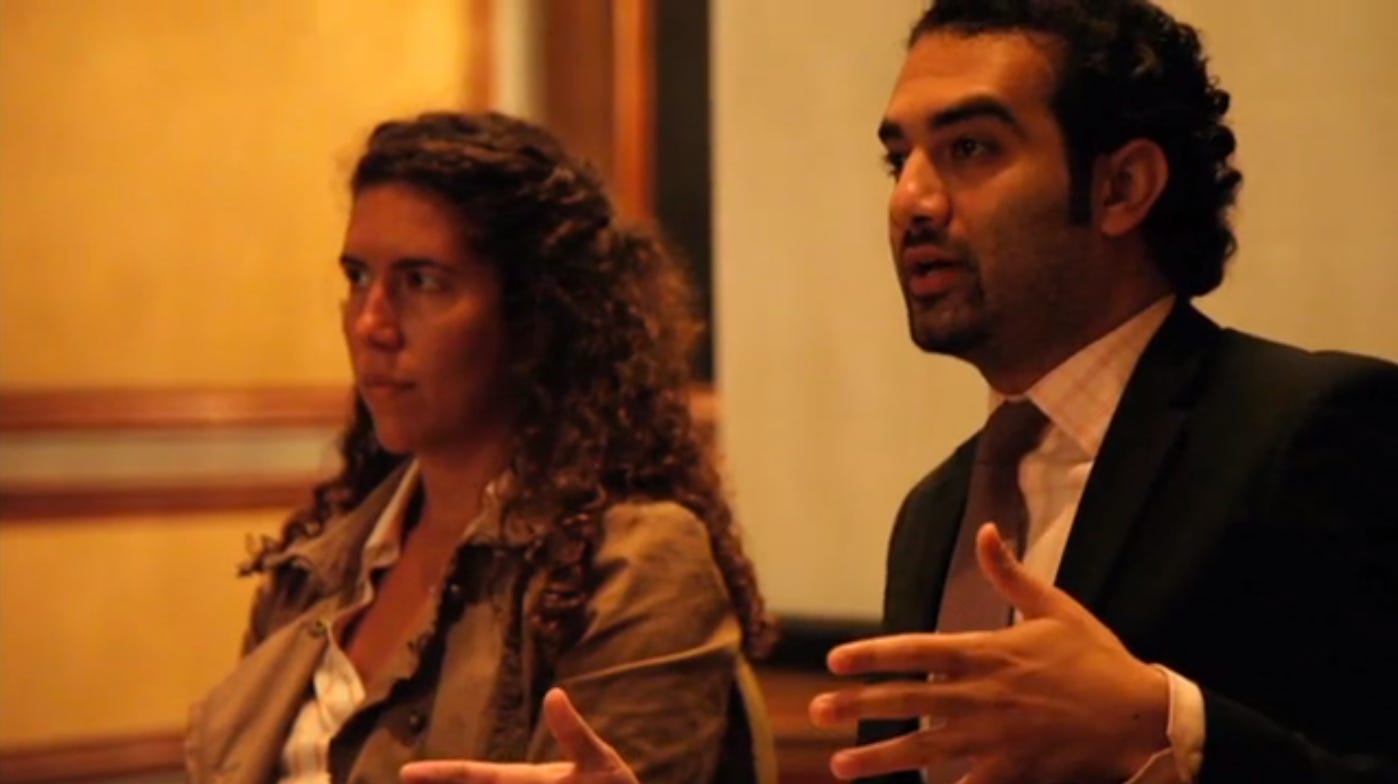
I first met Hamid on the streets of Cairo in 2011 when I was covering the Arab Spring for PBS FRONTLINE and GroundTruth and he was there doing field research. It was a moment that toppled the 30-year dictatorship of Hosni Mubarak, when Egyptians flooded the streets demanding their voices be heard after decades of repression. Throughout these changes, Shadi was featured in our FRONTLINE film titled “Revolution in Cairo” as an expert on the Muslim Brotherhood.
Back then, the idea of Shadi making a case for American dominance would have been unimaginable. But his thinking, like the world around him, has evolved. In some ways, it could be said that Shadi embodies the spirit of unpredictability that shapes the contours of the modern Middle East.
His insights are always interesting, but these days they are nothing short of startling. His thinking has evolved in extraordinary and unpredictable ways. This longtime critic of America’s often clumsy exertion of power in the Middle East is now providing thought leadership in favor of America stepping up and focusing its use of power in the region.
“I’m making the case that America is preferable to the alternatives,” Shadi told me. “Because America was founded upon a sense of moral purpose—because we have this sense of idealism shot through our history, even when we fall short—we can still be the last best hope.”
“Power is a reality,” he continued. “And I sometimes feel that my fellow travelers on the left want to be so morally pure and morally righteous that they don’t want to taint themselves with any hint of power, responsibility, or executive authority. But accepting power is the cost of being in reality…We really have to participate, organize, and advocate for the kind of foreign policy we want, because otherwise, we’re just standing on the sidelines while other people make those choices for us.”
Our discussion journeyed from the Middle East to American domestic politics and the historic election this week of Democratic Socialist Zohran Mamdani, making him New York’s first Muslim and South Asian mayor. Mamdani defied the pollsters and conventional wisdom and soundly defeated the powerful political dynasty of former governor, Andrew Cuomo.
Mamdani’s victory was fueled by an excitement among young voters who see in him a new spirit of change, and the results were more than a local upset. Shadi believes Mamdani’s win revealed deeper undercurrents in American politics—a tidal change that mirrors the moral and political tensions of the Middle East, particularly around Israel and Palestine amid an unstable ceasefire in Gaza. The sea change has roiled college campuses across the country, sparking debate that’s often raw, emotional, and at times misinformed and laced with both antisemitism and Islamophobia.
Our conversation ranged from the fragile promise of democracy in the Middle East to the moral contradictions of U.S. power—and how those same tensions are now playing out in American politics.
It was a fascinating dialogue with one of the most well-versed thinkers on U.S. foreign policy today.
Watch the full interview below.
Thank you for helping us get verification status! We have a generous donor who has offered us $500 and is requesting that we match this funding with 10 yearly memberships at our suggested level of $50.
Please help us reach this goal — we need 6 more donors to get there, and we already have 4. Can you be one of the six to help us reach this goal?