

Amid A Gathering Darkness
We all need to hold up the light of a free press and understand the urgency of saving local news

It’s getting darker, and democracy is dying.
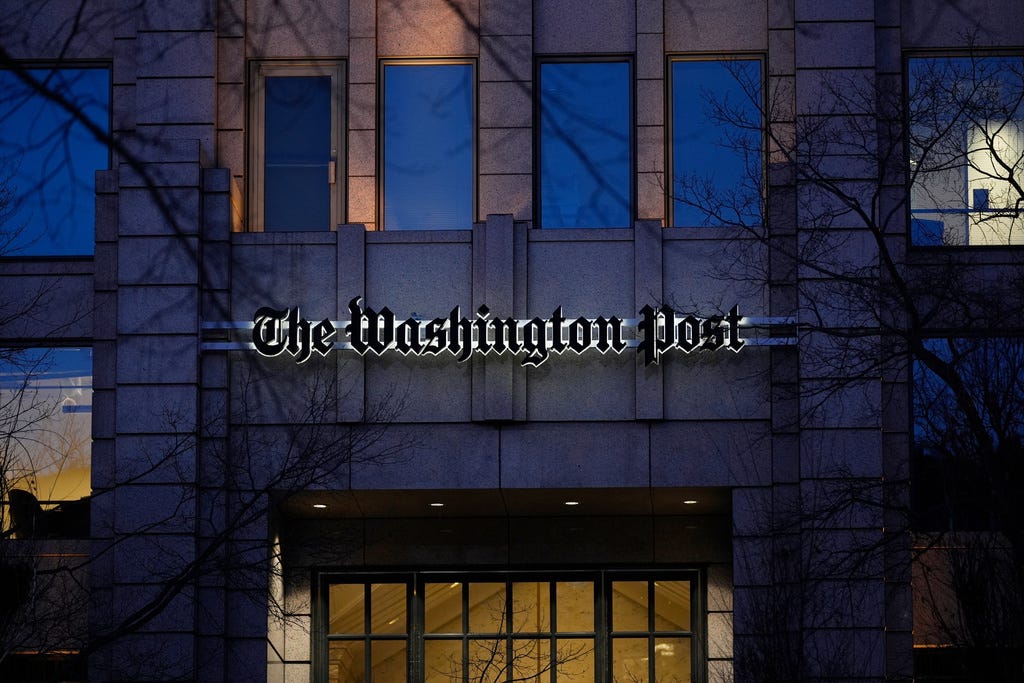
The gutting this week of one-third of the Washington Post staff by billionaire Jeff Bezos prompted my slightly revised and updated version of “Democracy Dies in Darkness,” the oft-quoted slogan introduced in 2017 as a mission statement at the very beginning of President Trump’s first term.
My revisions are perhaps a bit overstated, but it is hard not to feel the dim light of dusk creeping over our democracy. And it seems worth noting that the light of a free press is not only flickering out thanks to Trump but due to Bezos himself, who so proudly trotted out this slogan as a bulwark for journalism to do its job in holding Trump and other tyrants accountable lest we see democracy fall.
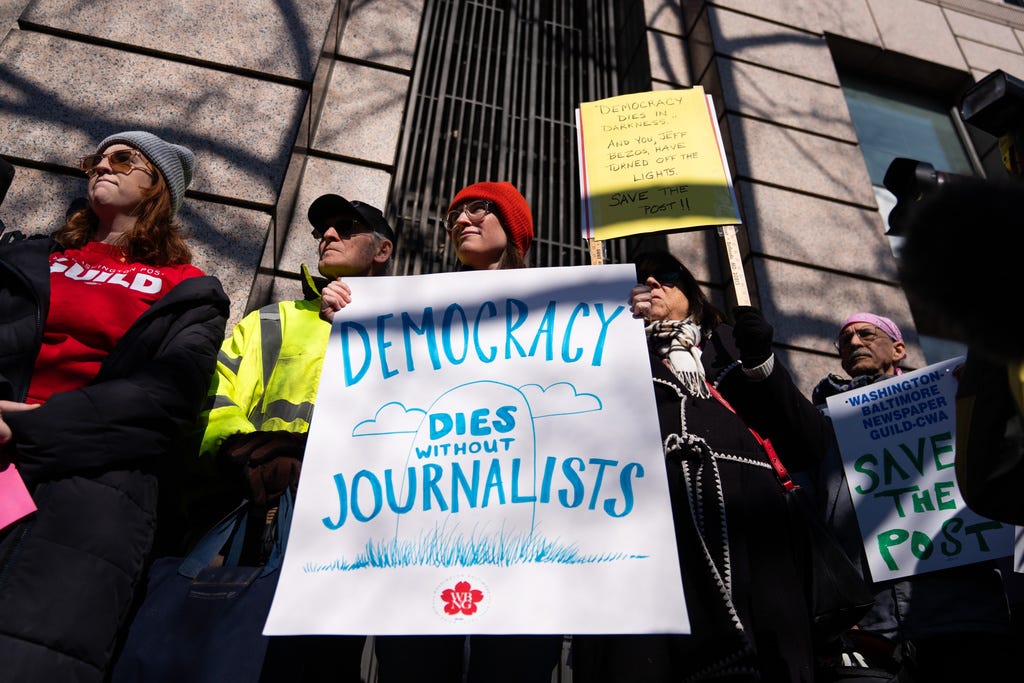
Bezos, owner of Amazon and among the richest of the billionaire class, made the sweeping layoffs as part of what is being called a “strategic reset” that will shrink news coverage, particularly the Post’s on-the-ground reporting in its own backyard in DC and in the Middle East, Asia and a good part of the global South. The cuts effectively gut the international desk. That decision comes on the heels of a year in which Bezos has sought to curry favor with Trump.
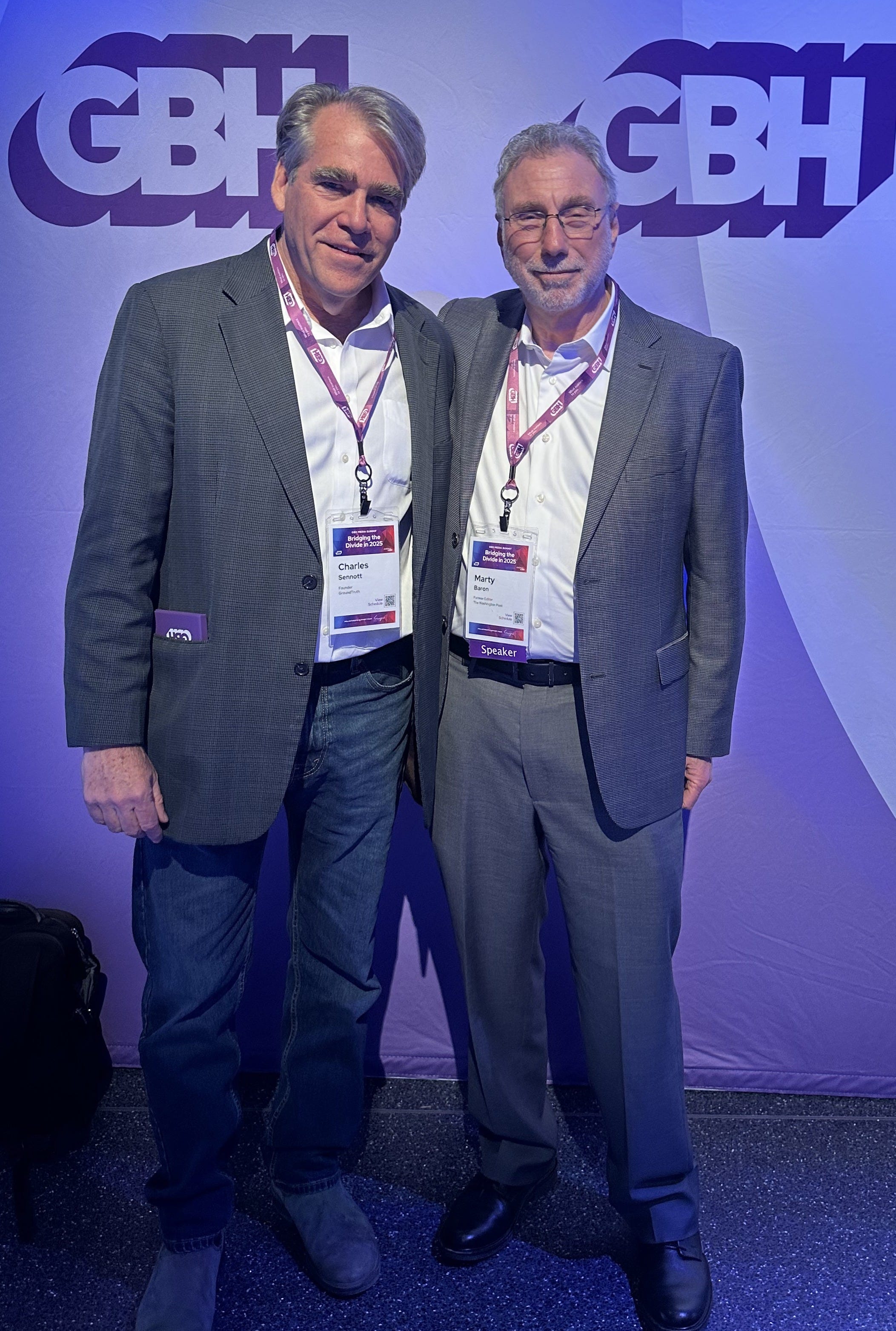
The cost cutting prompted Marty Baron, the legendary and Pulitzer-prize winning executive editor who he hired to lead the Washington Post for eight years, to speak out against the massive layoffs in a statement that did not mince words:
“This ranks among the darkest days in the history of one of the world’s greatest news organizations. The Washington Post’s ambitions will be sharply diminished, its talented and brave staff will be further depleted, and the public will be denied the ground-level, fact-based reporting in our communities and around the world that is needed more than ever. … This is a case study in near-instant, self-inflicted brand destruction.”
We live in a head-spinning period of decline in traditional journalism. This month the Corporation for Public Broadcasting was officially dissolved after Congress bowed to the will of Trump and voted for spending cuts that stripped the private, non-profit corporation of its more than $1 billion in funding after 58 years of service in support of 1500 public radio and television stations across the country and after establishing educational television programming ranging from Sesame Street to the PBS FRONTLINE award-winning documentary team. The move has severely impacted the PBS network which is not shutting down but struggling with staff cuts and restructuring after its federal funding was gutted. At the end of last year, we also saw CBS News, the network that served as home to legends like Walter Cronkite and Edward R Murrow, gutted amid a restructuring in the wake of the takeover by CEO David Ellison who received Trump administration approval for a merger of Paramount, which owns CBS, with Skydance. Ellison has close ties to Trump facilitated by his billionaire father, Larry Ellison, who is the co-founder of Oracle.
Beyond billionaire oligarchs tearing the heart out of the best of traditional media in the United States, the crisis in local news across America also continues apace. It seems one proud old newspaper after another is falling on hard times. Last month it was the Pittsburgh Post-Gazette which announced it would cease publication citing unsustainable financial losses over the last 20 years. The demise of organizations like the Post-Gazette is happening across the country with a staggering rate of 2.5 local newspapers closing every week, based on research by the Medill School of Journalism at Northwestern University, and that has meant a loss of as much as 75 percent of the workforce in newspapers over the last 20 years, according to the US Bureau of Labor Statistics.
It’s hard not to feel dispirited these days, and it is amid this terrible twilight that some of us are trying to hold onto some sense of optimism, that often irrational fuel that motivates entrepreneurs. This week I sat down for an interview with my long-time Boston Globe colleague and friend, Ellen Clegg, and a longtime associate from WGBH in Boston, Dan Kennedy, for an appearance on their podcast, “What Works” to talk about my journey as a self-confessed, serial entrepreneur in new media in both for-profit and non-profit models aimed at supporting a new generation of journalists to serve in under-covered communities.
I also had a chance to share the goals of my newest creation, GroundTruth Media Partners, LLC which is a spinoff of the non-profit GroundTruth Project. The new entity is the home of this Substack and seeks to explore possibilities on the frontiers of AI particularly where applications meet local news.
As I shared in the podcast, there needs to be more focus on how the AI platforms will require healthy local news organizations if they are going to train their Large Language Models on reliable and verified information. They will be wise to invest in struggling local news organizations and pay attention to an aphorism of the AI age: if local news did not exist, AI would need to invent it.
It is a challenging time for journalism for sure but also an exciting moment for creativity and innovation and I am reaching out to any and all who are inspired to meet the moment and fight like hell for a free press as the cornerstone of democracy. If democracy dies in darkness, then let’s be damn sure to do whatever we can to keep the lights on.
This right here:
"As I shared in the podcast, there needs to be more focus on how the AI platforms will require healthy local news organizations if they are going to train their Large Language Models on reliable and verified information. They will be wise to invest in struggling local news organizations and pay attention to an aphorism of the AI age: if local news did not exist, AI would need to invent it."
Spot on. Local news - specifically the rich media that comes when people actually go places, talk to people, take pictures, record voices, etc - will be the only thing to keep the AIs from becoming echo chambers of their own invention. This is our mission... and will be a vital part of if not the key to a sustainable financial model for journalism.